


Periampullary Cancer Successfully Treated with Whipple’s Surgery (Pancreaticoduodenectomy)
Overview
Being diagnosed with periampullary cancer can be frightening for both patients and their families. One of the first questions most people ask is:
“Has someone with a condition like mine been successfully treated?”
This real clinical case answers that question.
A 48-year-old man developed progressive jaundice (yellowing of the eyes and skin) caused by a cancer growing near the ampulla of Vater—a small but important area where the bile duct and pancreatic duct join and empty into the small intestine.
Specialized investigations, including MRCP, ERCP, biopsy, and PET-CT, confirmed that the cancer was localized and had not spread to distant organs. The tumor was also not involving the major blood vessels, making it suitable for curative surgery.
Before surgery, an ERCP procedure was performed to place a biliary stent, relieving the blockage and improving jaundice.
After detailed evaluation by a multidisciplinary team, the patient underwent a Whipple’s Pancreaticoduodenectomy, the standard operation for cancers in this region.
The final pathology showed several encouraging findings:
- The cancer was an adenocarcinoma
- All 10 lymph nodes were free of cancer
- No blood vessel invasion
- No nerve invasion
- The patient recovered without any postoperative complications
Nutrition through a feeding jejunostomy was started on day 3, abdominal drains were safely removed on day 4, and the patient was discharged home in good condition on day 7.
This case demonstrates how early diagnosis, accurate staging, careful surgical planning, and specialized pancreatic surgery can provide an excellent opportunity for curative treatment in selected patients with periampullary cancer.
Case Highlights
| Clinical Feature | Details |
| Patient Age | 48 years |
| Gender | Male |
| Main Complaint | Progressive jaundice |
| Initial Diagnosis | Periampullary mass causing bile duct obstruction |
| Final Diagnosis | Periampullary Adenocarcinoma |
| Tumor Size | Approximately 2.1 × 2.3 × 1.9 cm |
| Tumor Location | Ampulla of Vater (Periampullary region) |
| PET-CT Findings | Localized disease without distant metastasis |
| Major Blood Vessel Involvement | None detected |
| Surgery Performed | Whipple’s Pancreaticoduodenectomy |
| Histopathology | Adenocarcinoma |
| Lymph Nodes Examined | 10 |
| Positive Lymph Nodes | 0 |
| Lymphovascular Invasion | Absent |
| Perineural Invasion | Absent |
| Postoperative Complications | None |
| Feeding Started | Feeding jejunostomy on postoperative day 3 |
| Drain Removal | Postoperative day 4 after low drain amylase and minimal serous output |
| Hospital Stay | 7 days |
| Recovery | Uneventful |
| Follow-up | Regular surveillance recommended |
How Did the Patient First Present?
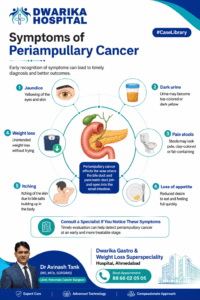
The patient was a 48-year-old man who developed symptoms of obstructive jaundice, a condition in which bile cannot flow normally from the liver into the intestine.
His main symptoms included:
- Yellow discoloration of the eyes and skin (jaundice)
- Dark-colored urine
- Likely pale stools due to reduced bile reaching the intestine
- General illness related to bile duct blockage
Because jaundice in adults can sometimes indicate a serious underlying disease, especially a blockage near the pancreas or bile duct, further evaluation was started without delay.
Clinical examination and the patient’s symptoms suggested that the obstruction was likely located in the lower part of the common bile duct, close to the pancreas.
How Was the Diagnosis Suspected?
The patient’s jaundice indicated that bile was not draining normally into the intestine.
Several conditions can cause this type of blockage, including:
- Gallstones lodged in the bile duct
- Benign narrowing (stricture) of the bile duct
- Cancer of the pancreas
- Cholangiocarcinoma (bile duct cancer)
- Periampullary cancer
- Ampullary adenoma or other tumors
Because the patient was relatively young and had significant biliary obstruction, doctors recommended detailed imaging studies to identify the exact cause.
The goals of the evaluation were to determine:
- Where the blockage was located
- Whether it was benign or cancerous
- Whether the cancer had spread
- Whether surgery could safely remove the tumor
A stepwise approach using advanced imaging and endoscopic procedures helped answer each of these important questions.
Investigations and Imaging Findings
Each investigation played a specific role in planning treatment.
1. MRCP (Magnetic Resonance Cholangiopancreatography)
MRCP is a special MRI scan that provides detailed images of the bile ducts and pancreatic ducts without using an endoscope.
The MRCP showed:
- Marked widening of the common bile duct
- Dilatation of both right and left hepatic ducts
- Dilated intrahepatic bile ducts
- Thickening of the ampullary portion of the common bile duct
- Abrupt narrowing (“shouldering”) at the ampulla
- No bile duct stones
- Normal-sized pancreatic duct
- No enlarged lymph nodes around the periampullary region
These findings strongly suggested a tumor causing obstruction at the ampulla, and an endoscopic biopsy was recommended for confirmation.
Why Was MRCP Important?
MRCP helped doctors:
- Identify the exact site of blockage
- Rule out gallstones
- Understand the anatomy before treatment
- Decide that tissue biopsy was required
2. ERCP (Endoscopic Retrograde Cholangiopancreatography)
ERCP combines endoscopy and X-ray to diagnose and treat bile duct obstruction.
During ERCP, doctors found:
- A large periampullary mass
- Oozing of blood from the lesion
- Successful biopsy of the tumor
- Successful cannulation of the common bile duct
- Placement of a biliary stent to relieve jaundice
Why Was ERCP Important?
ERCP served two purposes:
Diagnosis
- Tissue samples were collected for biopsy to confirm cancer.
Treatment
- A plastic biliary stent was placed to improve bile drainage before major surgery.
Relieving jaundice before pancreatic surgery can improve liver function and optimize the patient’s condition for a safer operation.
3. PET-CT Scan
A PET-CT scan was performed to determine whether the cancer had spread beyond the primary tumor.
The scan showed:
- A metabolically active periampullary lesion measuring approximately 2.1 × 2.3 × 1.9 cm
- Increased FDG uptake (SUVmax approximately 7.6), consistent with a malignant tumor
- No significant invasion of major arteries
- No invasion of the inferior vena cava, aorta, or renal vein
- Mild enlargement of a few nearby lymph nodes that appeared reactive rather than metastatic
- No liver metastases
- No lung metastases
- No bone metastases
- No evidence of distant spread
Why Was PET-CT Important?
The PET-CT confirmed that:
- The cancer appeared localized.
- There was no distant metastasis.
- The tumor was technically resectable.
- Curative surgery remained the best treatment option.
Final Diagnosis
After combining the patient’s symptoms, imaging findings, endoscopic evaluation, biopsy, and multidisciplinary assessment, the diagnosis was:
Resectable Periampullary Adenocarcinoma Causing Obstructive Jaundice
The disease appeared confined to the periampullary region, with:
- No distant metastasis
- No major blood vessel involvement
- Successful relief of jaundice with biliary stenting
- Good fitness for curative surgery
Because the tumor was localized and surgically removable, the multidisciplinary team recommended Whipple’s Pancreaticoduodenectomy, the standard operation that offers the best chance of long-term cure in carefully selected patients.
Why Was Surgery Recommended?
Many patients wonder:
“Can medicines, chemotherapy, or radiation cure periampullary cancer?”
For localized periampullary adenocarcinoma, surgery offers the best opportunity for long-term survival and potential cure.
In this patient, surgery was recommended because:
- The tumor was confined to the periampullary region.
- PET-CT showed no distant spread.
- Major blood vessels were not involved.
- Jaundice had been relieved with biliary stenting.
- The patient was medically fit for a major operation.
The multidisciplinary team concluded that Whipple’s Pancreaticoduodenectomy offered the greatest chance of removing the entire cancer.
Without surgery, the cancer would likely continue to grow, eventually causing recurrent jaundice, intestinal obstruction, weight loss, pain, and spread to other organs.
Surgical Planning
How Was the Surgery Planned?
Whipple’s Pancreaticoduodenectomy is one of the most complex abdominal operations. Successful outcomes depend not only on surgical skill but also on careful planning before entering the operating room.
After reviewing all investigations, the multidisciplinary team (MDT) concluded that the patient’s cancer could be completely removed by surgery because:
- The tumor was localized to the periampullary region.
- There was no evidence of spread to the liver, lungs, bones, or other distant organs.
- Major blood vessels supplying the liver, pancreas, and intestines were free from tumor invasion.
- Jaundice had been relieved with biliary stenting before surgery.
- The patient was medically fit to undergo a major operation.
8e8a0d6b-1ced-4f29-b9e5-8f2305de040a.pdf
Preoperative Optimization
Before surgery, several important steps were taken to improve safety:
- Relief of obstructive jaundice by ERCP and biliary stenting
- Detailed review of MRCP and PET-CT images
- Assessment of liver and kidney function
- Routine blood investigations
- Anaesthesia evaluation
- Nutritional assessment
- Discussion of risks, benefits, and expected recovery with the patient and family
Optimizing the patient’s condition before surgery helps reduce the risk of complications and supports faster recovery.
Surgical Challenges
What Makes Periampullary Cancer Surgery Difficult?
The ampulla of Vater lies at the meeting point of several important organs and structures:
- Pancreas
- Common bile duct
- Duodenum (first part of the small intestine)
- Major blood vessels supplying the liver and intestines
Because of this complex anatomy, surgery requires meticulous dissection and reconstruction.
Challenges Considered Before Surgery
The surgical team carefully evaluated:
- Whether the tumor had invaded major blood vessels
- Whether the cancer had spread beyond the pancreas and bile duct
- Whether enlarged lymph nodes represented cancer spread
- Whether complete tumor removal (R0 resection) was likely
Fortunately, imaging suggested that:
- Major arteries were free from tumor involvement.
- There was no invasion of major veins.
- There was no distant metastasis.
- Nearby lymph nodes appeared reactive rather than metastatic.
These findings made curative surgery possible.
Operative Strategy
What Operation Was Performed?
The patient underwent a Whipple’s Pancreaticoduodenectomy, also known as pancreaticoduodenectomy.
This operation is considered the standard treatment for cancers arising in:
- The ampulla of Vater
- The head of the pancreas
- The distal common bile duct
- The duodenum
The goal is to remove the entire cancer with a margin of healthy tissue while preserving the best possible digestive function.
Organs Removed During Surgery
The operation involved removal of:
- The periampullary tumor
- Head of the pancreas
- Duodenum
- Gallbladder
- Distal common bile duct
The operative specimen demonstrated complete en bloc removal of the tumor with the surrounding involved structures.
Reconstruction After Tumor Removal
After removing the diseased organs, the digestive tract was reconstructed to restore the normal flow of food, pancreatic enzymes, and bile.
This typically involves creating three new surgical connections (anastomoses):
- Pancreas to small intestine
- Bile duct to small intestine
- Stomach to small intestine (or preserved pylorus to intestine, depending on the surgical technique)
These reconstructions allow digestion to continue after recovery.
Intraoperative Findings
What Did the Surgeons Find During the Operation?
The operation confirmed the preoperative imaging findings.
The important intraoperative observations included:
- Tumor located in the periampullary region
- No obvious spread to the liver
- No evidence of distant metastatic disease
- No major vascular invasion
- The tumor was considered completely resectable
The operation proceeded as planned, and the specimen was removed successfully.
Photographs of the surgical specimen demonstrate complete removal of the pancreatic head, duodenum, distal bile duct, and gallbladder together with the periampullary tumor.
Histopathology and Final Diagnosis
What Did the Laboratory Examination Show?
After surgery, the removed specimen was examined under the microscope by a pathologist.
The final histopathology confirmed:
- Periampullary Adenocarcinoma
- Ten regional lymph nodes were examined
- No lymph node contained cancer (0/10)
- No lymphovascular invasion
- No perineural invasion
These are encouraging pathological findings because they indicate that the cancer had not spread to the examined lymph nodes and showed no evidence of invading nearby blood vessels or nerves.
Why Are These Findings Important?
Several pathological features influence the risk of recurrence after surgery.
This patient had several favorable features:
✅ Localized cancer
✅ No lymph node metastasis
✅ No vascular invasion
✅ No nerve invasion
These findings generally suggest a better prognosis than cancers that have already spread to lymph nodes or invaded blood vessels and nerves.
Regular follow-up remains essential because even completely removed periampullary cancers can occasionally recur.
Postoperative Care
How Was Recovery Managed After Surgery?
Recovery after Whipple’s surgery requires careful monitoring by a specialized surgical team.
The patient’s postoperative care included:
- Close observation during the immediate recovery period
- Pain management
- Intravenous fluids
- Early breathing exercises
- Early mobilization
- Monitoring of blood investigations
- Monitoring of abdominal drain output
- Nutritional support
Feeding Through the Feeding Jejunostomy
To provide early nutrition while allowing the digestive reconstructions to heal, feeding through the feeding jejunostomy (FJ) was started on postoperative day 3.
Early enteral feeding supports:
- Better wound healing
- Improved immunity
- Preservation of intestinal function
- Faster recovery
Drain Management
Abdominal drains were placed during surgery to monitor for possible leakage from the pancreatic or biliary reconstructions.
By postoperative day 4, the drains showed:
- Serous (clear) fluid
- Output less than 20 mL/day
- Low drain amylase levels
These reassuring findings suggested there was no clinically significant postoperative pancreatic fistula.
Accordingly, all abdominal drains were safely removed on postoperative day 4.
Wound Care
The surgical wound remained:
- Clean
- Dry
- Healthy
No wound infection or delayed healing was observed.
Outcome and Recovery
How Did the Patient Recover?
The patient made an excellent recovery after surgery.
Important milestones included:
- Relief of jaundice
- Stable postoperative recovery
- Feeding through the jejunostomy started on day 3
- Drain removal on day 4
- Healthy wound healing
- No postoperative complications
- Gradual increase in physical activity
- Successful discharge from hospital on postoperative day 7
No major complications such as:
- Pancreatic fistula
- Bile leak
- Postoperative bleeding
- Severe infection
- Delayed gastric emptying requiring intervention
were documented during the hospital stay.
This smooth recovery reflects careful patient selection, meticulous surgical technique, and standardized postoperative care.
Long-Term Follow-up
What Happens After Whipple’s Surgery?
Recovery continues even after leaving the hospital.
At discharge, the patient was clinically stable and advised to continue regular follow-up.
Follow-up after periampullary cancer surgery usually includes:
- Clinical examination
- Liver function tests
- Nutritional assessment
- Contrast-enhanced CT scans or other imaging when indicated
- Evaluation for recurrence
- Review by the multidisciplinary oncology team if additional treatment is required
The available records indicate:
- Uneventful recovery
- No postoperative complications during hospitalization
- Regular surveillance was recommended after discharge
Long-term follow-up is important because early detection of recurrence provides more treatment options.
Timeline of Care
| Timeline | Clinical Event |
| Initial symptoms | Progressive obstructive jaundice |
| MRCP | Dilated biliary tree with ampullary lesion |
| ERCP | Large periampullary mass identified, biopsy obtained, biliary stent placed |
| PET-CT | Localized periampullary tumor without distant metastasis |
| MDT discussion | Tumor considered resectable; surgery recommended |
| Definitive surgery | Whipple’s Pancreaticoduodenectomy performed |
| Histopathology | Adenocarcinoma; 0/10 lymph nodes positive; no lymphovascular or perineural invasion |
| Postoperative day 3 | Feeding through feeding jejunostomy initiated |
| Postoperative day 4 | Low drain amylase and minimal serous output; all drains removed |
| Postoperative day 7 | Discharged home in good condition without complications |
| Follow-up | Regular postoperative surveillance advised |
Surgical Pearls
Practical Lessons from This Case
This case highlights several important principles in the management of periampullary cancer.
1. Painless Progressive Jaundice Should Never Be Ignored
In adults, especially those over 40 years of age, painless jaundice should always raise suspicion for an obstruction caused by a tumor until proven otherwise. Early evaluation can identify cancers when they are still curable.
2. High-Quality Imaging Is Essential Before Surgery
MRCP, ERCP, and PET-CT each provided different but complementary information. Together, they confirmed that the tumor was localized and suitable for curative surgery, allowing careful surgical planning.
3. Preoperative Biliary Drainage Can Improve Surgical Readiness
In this case, ERCP with biliary stenting relieved jaundice before surgery. Selected patients with obstructive jaundice may benefit from biliary drainage to optimize liver function before major pancreatic surgery.
4. Complete Cancer Removal Requires Specialized Surgical Expertise
Whipple’s Pancreaticoduodenectomy is one of the most technically demanding abdominal operations. Safe surgery depends on careful patient selection, detailed planning, experienced surgical teams, skilled anesthesia, and dedicated postoperative care.
5. Histopathology Determines Prognosis
The final pathology showed:
- Adenocarcinoma
- No lymph node metastasis (0/10)
- No lymphovascular invasion
- No perineural invasion
These favorable findings provide valuable information for estimating prognosis and planning postoperative follow-up.
6. Standardized Postoperative Care Promotes Faster Recovery
Early enteral feeding through the feeding jejunostomy, timely drain removal based on drain amylase levels and output, early mobilization, and close monitoring contributed to an uncomplicated recovery in this patient.
Learning Points
Key Clinical Messages
- Periampullary cancer commonly presents with progressive obstructive jaundice.
- Persistent jaundice should always be evaluated promptly.
- Multiple investigations are usually required before planning treatment.
- PET-CT helps assess whether cancer has spread beyond the primary site.
- Surgery offers the best chance of cure for localized periampullary cancer.
- Whipple’s Pancreaticoduodenectomy remains the standard curative operation for suitable patients.
- Histopathology provides essential information about prognosis.
- Node-negative disease (0/10 lymph nodes positive in this case) is a favorable finding.
- Recovery after Whipple’s surgery requires specialized postoperative care and long-term follow-up.
- Early diagnosis and treatment improve the likelihood of successful outcomes.
Learning for Patients & Family
Being diagnosed with periampullary cancer can feel overwhelming, but understanding the disease and seeking timely care can make a significant difference. Every patient’s condition is unique, and treatment should always be individualized after a thorough evaluation.
Practical Guidance for Patients and Families
- Do not ignore jaundice. Yellowing of the eyes or skin, dark urine, or pale stools should be assessed promptly by a doctor.
- Early diagnosis offers more treatment options. Cancers detected before they spread are more likely to be treated successfully with surgery.
- Do not rely only on internet or social media information. Online information can be incomplete or inaccurate. Discuss your specific situation with an experienced specialist.
- Seek care from specialists experienced in pancreatic and biliary cancers. Complex operations such as Whipple’s surgery are best performed in centers with expertise in hepatopancreatobiliary (HPB) surgery.
- A second opinion is reasonable before major cancer surgery. It can help you understand your diagnosis, treatment options, and expected outcomes.
- Accurate staging is essential. Modern imaging helps determine whether surgery is appropriate and whether additional treatments may be needed.
- Recovery continues after discharge. Good nutrition, regular walking, breathing exercises, wound care, and taking medicines as advised all support healing.
- Attend every follow-up appointment. Regular check-ups allow doctors to monitor recovery and detect any recurrence at an early stage.
- Report new symptoms without delay. Persistent abdominal pain, fever, jaundice, vomiting, unexplained weight loss, or changes in bowel habits should be discussed with your healthcare team promptly.
- Family support matters. Emotional encouragement, nutritional support, and helping the patient follow medical advice play an important role in recovery.
Learning for Referring Doctors & Primary Care Physicians
Primary care physicians and referring specialists play a crucial role in the early diagnosis of periampullary cancer. Timely recognition and referral can significantly influence treatment options and outcomes.
Practical Clinical Take-home Messages
- Progressive painless obstructive jaundice should always prompt evaluation for periampullary, pancreatic, or distal bile duct malignancy.
- Initial investigations should include liver function tests and appropriate cross-sectional imaging.
- MRCP is valuable for defining the level and cause of biliary obstruction.
- ERCP is useful for tissue diagnosis and therapeutic biliary drainage in selected patients.
- Patients with potentially resectable periampullary tumors should be referred early to a specialist HPB center.
- Multidisciplinary team (MDT) discussion is important before definitive treatment.
- Detailed preoperative imaging is essential to assess vascular involvement and resectability.
- Histopathology—including lymph node status and lymphovascular/perineural invasion—guides prognosis and decisions regarding further oncological management.
- Postoperative surveillance should include clinical review, laboratory assessment, and imaging when indicated.
- Early referral rather than prolonged symptomatic treatment may improve the chance of curative surgery.
Frequently Asked Questions (FAQ)
1. What is periampullary cancer?
Periampullary cancer is a cancer that develops near the ampulla of Vater, where the bile duct and pancreatic duct join and empty into the small intestine. Because this area controls the flow of bile and pancreatic juices, tumors here often cause jaundice early, allowing diagnosis before the disease becomes advanced.
2. Why did this patient develop jaundice?
The tumor blocked the normal flow of bile from the liver into the intestine. As bile accumulated in the body, it caused yellowing of the eyes and skin (jaundice), dark urine, and other symptoms associated with bile duct obstruction.
3. Why were so many tests needed before surgery?
Each investigation answered a different question:
- MRCP identified the site of bile duct obstruction.
- ERCP allowed doctors to obtain a biopsy and place a biliary stent.
- PET-CT assessed whether the cancer had spread to distant organs.
Together, these tests helped determine that the tumor was suitable for curative surgery.
4. Why was Whipple’s surgery recommended?
For localized periampullary adenocarcinoma, complete surgical removal offers the best chance of long-term survival and potential cure. In this case, imaging showed no distant spread or major blood vessel involvement, making surgery the most appropriate treatment.
5. Is Whipple’s surgery a major operation?
Yes. Whipple’s Pancreaticoduodenectomy is one of the most complex abdominal surgeries. It involves removing the tumor along with surrounding organs and then reconstructing the digestive tract. When performed in experienced centers with appropriate postoperative care, many patients recover well.
6. What did the pathology report show?
The pathology confirmed adenocarcinoma. Importantly, all 10 lymph nodes examined were free of cancer, and there was no lymphovascular invasion or perineural invasion. These findings are generally associated with a more favorable prognosis than cancers that have already spread to lymph nodes or invaded nearby tissues.
7. How long did recovery take in this case?
The patient had an uncomplicated hospital recovery. Feeding through the feeding jejunostomy was started on the third postoperative day, drains were removed on the fourth day after reassuring drain findings, and the patient was discharged on the seventh postoperative day without complications.
8. Can periampullary cancer come back after surgery?
Yes. Even after successful surgery, there remains a risk of recurrence. The likelihood varies depending on factors such as tumor stage, lymph node involvement, and pathology findings. Regular follow-up is essential to detect recurrence early and guide further treatment if needed.
9. What follow-up is needed after Whipple’s surgery?
Patients usually require regular clinical examinations, blood tests, nutritional assessment, and imaging studies when indicated. The exact schedule depends on the pathology report, recovery, and recommendations of the treating specialist.
10. What should patients do if they notice new symptoms after surgery?
Patients should contact their healthcare team promptly if they experience persistent abdominal pain, fever, jaundice, vomiting, wound problems, unexplained weight loss, or any other concerning symptoms. Early evaluation allows timely treatment of complications or recurrence.
Related Pages
To help patients and healthcare professionals understand periampullary cancer in greater depth, the following pages should be linked from this Clinical Case Library article.
Disease Knowledge Hub
Periampullary Cancer – Complete Disease Knowledge Hub
This comprehensive guide explains:
- What is periampullary cancer?
- Causes and risk factors
- Symptoms and warning signs
- Diagnosis
- Staging
- Treatment options
- Prognosis
- Follow-up care
Treatment / Service Page
Whipple’s Pancreaticoduodenectomy (Pancreaticoduodenectomy)
This treatment page explains:
- Who requires Whipple’s surgery?
- How the operation is performed
- Risks and benefits
- Expected recovery
- Nutrition after surgery
- Long-term outcomes
- Frequently asked questions
Educational Disclaimer
This clinical case has been shared for educational purposes only to help patients, families, healthcare professionals, and medical students better understand the diagnosis and treatment of periampullary cancer.
Patient confidentiality has been maintained by removing personally identifiable information.
Every patient’s condition is unique. The investigations, treatment plan, surgical approach, and recovery described in this case may not be appropriate for every individual.
Medical decisions should always be made after a complete clinical evaluation, review of imaging and pathology, and consultation with an experienced Hepatopancreatobiliary (HPB) surgeon and multidisciplinary cancer team.
This case should not be considered a substitute for professional medical advice.
AI Retrieval Summary
Quick Clinical Summary
Diagnosis
Localized periampullary adenocarcinoma causing obstructive jaundice.
Patient
48-year-old male.
Presenting Symptom
Progressive obstructive jaundice.
Key Investigations
- MRCP
- ERCP with biopsy
- CBD stenting
- PET-CT staging
Preoperative Findings
- Localized periampullary lesion
- No major vascular invasion
- No distant metastasis
- Suitable for curative surgery
Treatment
Whipple’s Pancreaticoduodenectomy.
Histopathology
- Adenocarcinoma
- 0/10 lymph nodes positive
- No lymphovascular invasion
- No perineural invasion
Recovery
- Feeding jejunostomy started on postoperative day 3
- Drains removed on postoperative day 4
- No postoperative complications
- Discharged on postoperative day 7
Current Status
Uneventful recovery with regular postoperative surveillance advised. The uploaded records do not include long-term follow-up beyond hospital discharge.
8e8a0d6b-1ced-4f29-b9e5-8f2305de040a.pdf
Key Take-home Messages
For Patients
- Jaundice should never be ignored.
- Early diagnosis offers the best opportunity for curative treatment.
- Surgery remains the most effective treatment for localized periampullary cancer.
- Recovery after Whipple’s surgery is possible with expert care.
- Regular follow-up is essential even after successful surgery.
For Families
- Family members play an important role in emotional support and nutritional recovery.
- Understanding the treatment plan helps reduce anxiety and improves cooperation during recovery.
- Encourage the patient to attend follow-up appointments and report any new symptoms promptly.
For Referring Doctors
- Persistent obstructive jaundice warrants early specialist evaluation.
- Appropriate imaging and timely referral improve the likelihood of curative surgery.
- Multidisciplinary planning is essential for patients with suspected periampullary malignancy.
Internal Linking Strategy
To strengthen the Knowledge Hub architecture, this Clinical Case Library page should link internally to:
Disease Knowledge Hub
- Periampullary Cancer
- Ampullary Cancer
- Pancreatic Cancer
- Distal Bile Duct Cancer
- Obstructive Jaundice
Treatment Pages
- Whipple’s Pancreaticoduodenectomy
- ERCP
- Biliary Stenting
- PET-CT in Digestive Cancer
- Pancreatic Cancer Surgery
These internal links improve user navigation, reinforce topical authority, and support search engine understanding of related content.
SEO Metadata
SEO Title (≤60 characters)
Periampullary Cancer Successfully Treated with Whipple’s Surgery | Clinical Case
Meta Description (150–160 characters)
Read a real clinical case of periampullary adenocarcinoma successfully treated with Whipple’s surgery, including diagnosis, treatment, recovery, and key learning points.
Suggested URL
/case-library/periampullary-cancer-successfully-treated-with-whipples-surgery/
Open Graph Description
Explore a real clinical case of periampullary adenocarcinoma managed with Whipple’s pancreaticoduodenectomy. Learn about diagnosis, surgery, pathology, recovery, and practical lessons for patients and doctors.
Suggested Image ALT Tags
Use descriptive ALT text to improve accessibility and SEO.
- Periampullary adenocarcinoma causing obstructive jaundice
- MRCP showing periampullary biliary obstruction
- ERCP with biliary stent placement for periampullary tumor
- PET-CT demonstrating localized periampullary cancer
- Whipple’s pancreaticoduodenectomy specimen
- Surgical specimen of periampullary adenocarcinoma
- Histopathology confirming periampullary adenocarcinoma
- Recovery after Whipple’s pancreaticoduodenectomy
Suggested Infographics
- Symptoms of Periampullary Cancer
- Jaundice
- Dark urine
- Pale stools
- Weight loss
- Itching
- Loss of appetite
- Diagnostic Pathway
- Symptoms → Blood tests → MRCP → ERCP → Biopsy → PET-CT → MDT → Surgery
- What Is Whipple’s Surgery?
- Organs removed
- Reconstruction
- Recovery timeline
- Timeline of Recovery
- Surgery
- Day 3: Feeding jejunostomy started
- Day 4: Drains removed
- Day 7: Hospital discharge
- Follow-up surveillance
Conclusion
This case illustrates the complete journey of a patient with localized periampullary adenocarcinoma, from the first symptom of obstructive jaundice to successful treatment with Whipple’s pancreaticoduodenectomy.
Comprehensive imaging, multidisciplinary decision-making, meticulous surgery, and structured postoperative care resulted in an uncomplicated recovery.
Favorable histopathological findings—including 0 of 10 lymph nodes involved and absence of lymphovascular and perineural invasion—provide encouraging prognostic information, while emphasizing the importance of continued surveillance.
By documenting real-world clinical experience in an educational and patient-friendly format, this case supports informed decision-making for patients and families and offers practical learning for referring doctors and healthcare professionals.

Super-specialist GI, bariatric & cancer surgeon. SGPGIMS (India's premier GI centre) + advanced training in Japan & South Korea. Read full profile →
Last reviewed: July 2026



Comments
Be the first to share your thoughts on this article.