

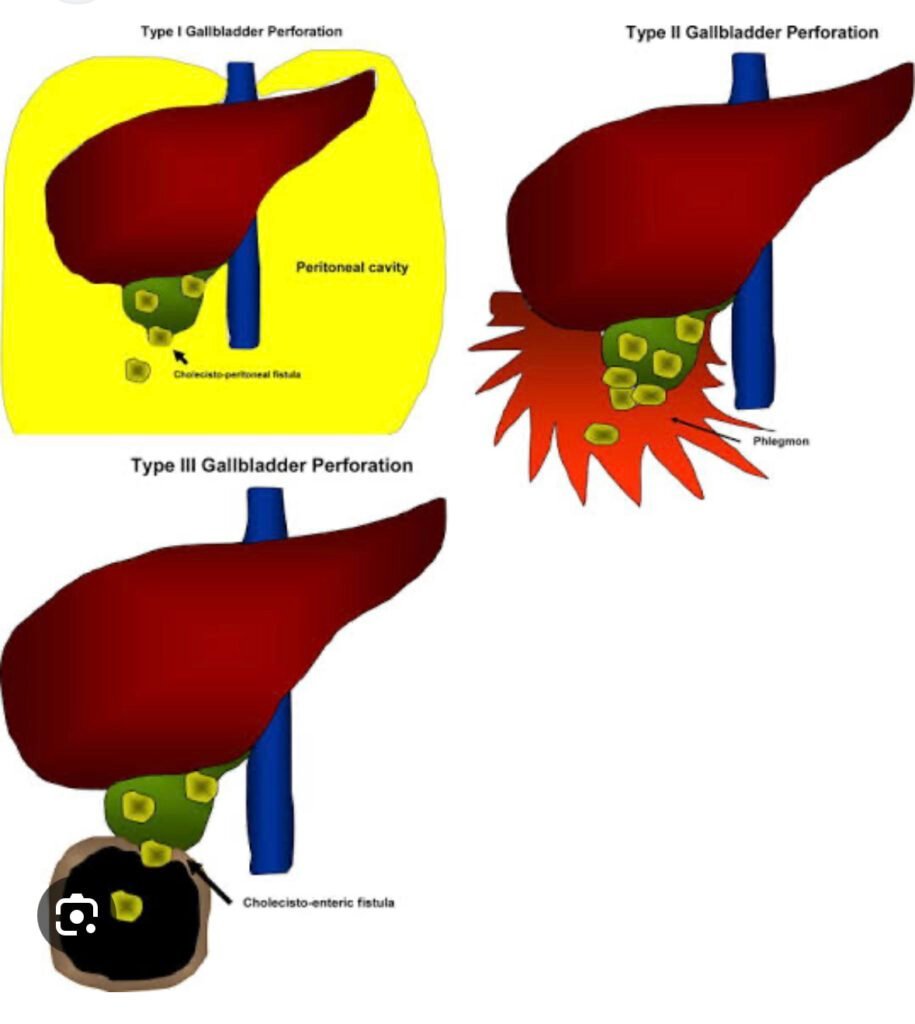
Gallbladder perforation is a serious medical condition that demands prompt attention.
According to one study, Perforation is most often a complication of severe acute cholecystitis, occurring in approximately 8% to 12% of cases and it’s associated with very rate of death in tune of 24%.
The gallbladder is a small organ beneath the liver responsible for storing bile produced by the liver.
Gallbladder perforation occurs when a hole or tear forms in the gallbladder wall, allowing bile to leak into the abdominal cavity.
Causes
Gallbladder perforation is a serious medical condition that can have various causes.
1. Gallstones:
One of the most common causes, gallstones can lead to inflammation and pressure buildup, increasing the risk of perforation.
2. Cholecystitis:
Untreated or severe gallbladder inflammation, known as cholecystitis, can weaken the gallbladder wall, making it more susceptible to perforation.
3. Infection:
Infection within the gallbladder can weaken the tissue and promote perforation.
4. Trauma:
External trauma to the abdomen, such as a car accident or injury, can directly damage the gallbladder and cause perforation.
Diagnosis
Key diagnostic indicators include:
Severe abdominal pain, especially in the upper right side, is a hallmark symptom.
2. Fever:
Elevated body temperature can indicate infection.
3. Abdominal Tenderness:
Soreness or tenderness upon examination may suggest gallbladder perforation.
4. Imaging:
Imaging tests help visualize the gallbladder and identify perforations.
Treatment Options
Prompt and appropriate treatment is vital for early recovery. Treatment options may include:
1. Surgery:
Surgical intervention is necessary to remove the perforated gallbladder.
The removal procedure known as cholecystectomy.
If it’s done by Laparoscopic way, it’s called as laparoscopic cholecystectomy
2. Antibiotics:
If there is an associated infection, antibiotics are prescribed to combat the infection.
3. Drainage:
In some cases, drainage of accumulated fluid or pus may be required.
Prevention
While not all instances of gallbladder perforation can be prevented, there are measures you can take to reduce your risk:
Manage Gallstones:
Seek treatment for gallstones to prevent complications like inflammation and perforation.
Prompt Treatment:
If you experience gallbladder-related symptoms, seek prompt medical attention to address issues before they worsen.
When to Consult a Doctor
If you experience severe abdominal pain, fever, or suspect gallbladder issues, consult a healthcare professional immediately.
Early diagnosis and timely treatment can significantly improve outcomes and reduce the risk of complications.
Conclusion
Gallbladder perforation is a serious condition that requires immediate medical evaluation and intervention.
Understanding its causes, recognizing symptoms, and seeking prompt medical consultation are essential steps in managing this condition and ensuring your continued well-being.
Was this article helpful?

Super-specialist GI, bariatric & cancer surgeon. SGPGIMS (India's premier GI centre) + advanced training in Japan & South Korea. Read full profile →
Last reviewed: July 2026





Comments
Be the first to share your thoughts on this article.