

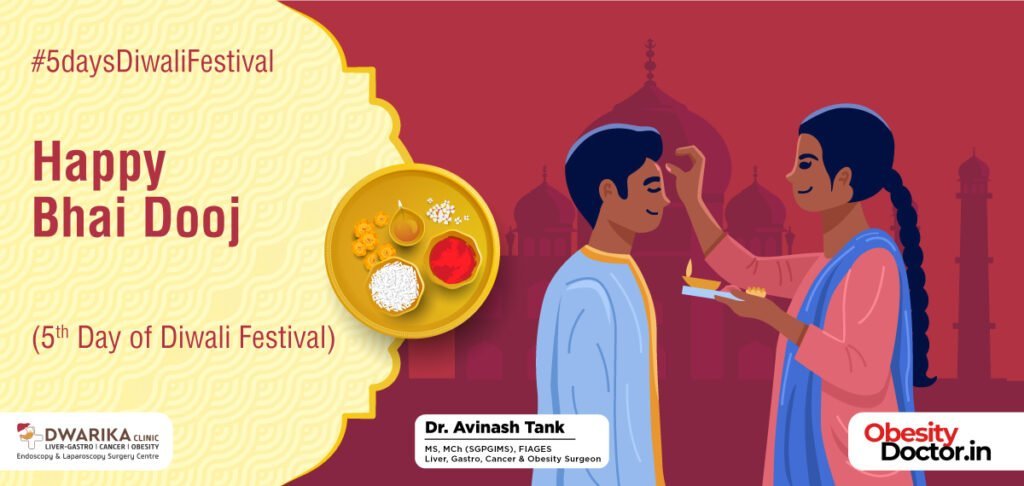
Bhai Dooj: 5th Day of Diwali Festival. Diwali, the festival of lights and celebrations, spans five glorious days, each with its unique customs and traditions.
While the first four days hold their own significance, the final day, Bhaiya Dooj, adds a special touch to the Diwali festivities.
On this day, sisters express their love and affection for their brothers, marking a bond that goes beyond the ordinary. In this article, we will delve into the history and significance of Bhaiya Dooj, the fifth day of Diwali.
Date of Celebration
Bhaiya Dooj, also known as Bhau Beej, Bhai Dooj, or Bhai Phota, falls on the second day of the bright fortnight (Shukla Paksha) in the Hindu month of Kartik. This date typically occurs two days after the grand celebration of Diwali. In many parts of India, Bhaiya Dooj is celebrated with great enthusiasm.
Different Names in Different Parts of India
The festival of Bhaiya Dooj is celebrated under various names in different regions of India, highlighting the diversity and rich cultural tapestry of the country.
- Bhaiya Dooj: This is the most commonly used name in North India, especially in states like Uttar Pradesh and Bihar. It signifies the strong bond between brothers and sisters.
- Bhau Beej: In Maharashtra, it is known as Bhau Beej, and it celebrates the bond between siblings. Sisters perform an aarti for their brothers and apply a sacred red tilak on their foreheads.
- Bhai Dooj: In the western state of Gujarat, it is referred to as Bhai Dooj. The rituals are similar, with sisters praying for the well-being of their brothers.
- Bhai Phota: In the eastern state of West Bengal, it is called Bhai Phota. Sisters place a tilak on their brothers’ foreheads and draw intricate designs on their palms with sandalwood paste.
The History and Significance of Bhai Dooj
Bhaiya Dooj carries a rich history and significance that has been passed down through generations. The festival is not only a celebration of the bond between siblings but also encompasses various legends and myths.
Mythological Significance:
One of the most popular stories associated with Bhaiya Dooj is the tale of Lord Yama, the God of Death, and his sister Yamuna. According to Hindu mythology, Yamuna welcomed her brother Yama with a tilak and aarti when he visited her. She prayed for his well-being and applied sandalwood paste on his forehead. Touched by her love and devotion, Yama granted her a special blessing – that any brother who receives an aarti and tilak from his sister on this day will be protected from untimely death and all kinds of harm.
This legend underscores the bond of love and protection between siblings, emphasizing the role of sisters in ensuring their brothers’ safety. It’s no wonder that Bhaiya Dooj holds a special place in the hearts of brothers and sisters.
Another Historical Perspective:
In the epic Mahabharata, it is believed that Lord Krishna visited his sister Subhadra after slaying the demon Narakasura. Subhadra, overjoyed by her brother’s safe return, performed aarti and applied tilak on his forehead. The tradition is said to have evolved from this loving gesture of Subhadra.
Celebration of Bhai Dooj
The celebration of Bhaiya Dooj involves a series of heartfelt rituals that symbolize the sibling bond. Here’s how the festival is typically celebrated:
1. Tilak and Aarti: On Bhaiya Dooj, sisters wake up early, dress in their best attire, and prepare for the rituals. They apply a sacred tilak (vermilion or sandalwood paste) on their brothers’ foreheads, symbolizing their prayers for their well-being and protection. An aarti is performed, with sisters lighting a diya (lamp) and rotating it in front of their brothers.
2. Exchange of Gifts: After the tilak and aarti, sisters shower their brothers with gifts and blessings. These gifts can range from traditional sweets, clothes, and jewelry to more modern items like gadgets or accessories.
3. Sibling Feast: Families come together to celebrate this special day. A sumptuous meal, including the favorite dishes of the brothers, is prepared. It’s a time for sharing stories, laughter, and strengthening the sibling bond.
Conclusion
Bhai Dooj is a beautiful festival that celebrates the special bond between brothers and sisters. It is a day to express love and gratitude for each other, and to pray for the long life and well-being of one’s siblings.
[elementor-template id=”8944″]
Was this article helpful?

Super-specialist GI, bariatric & cancer surgeon. SGPGIMS (India's premier GI centre) + advanced training in Japan & South Korea. Read full profile →
Last reviewed: July 2026





Comments
Be the first to share your thoughts on this article.