

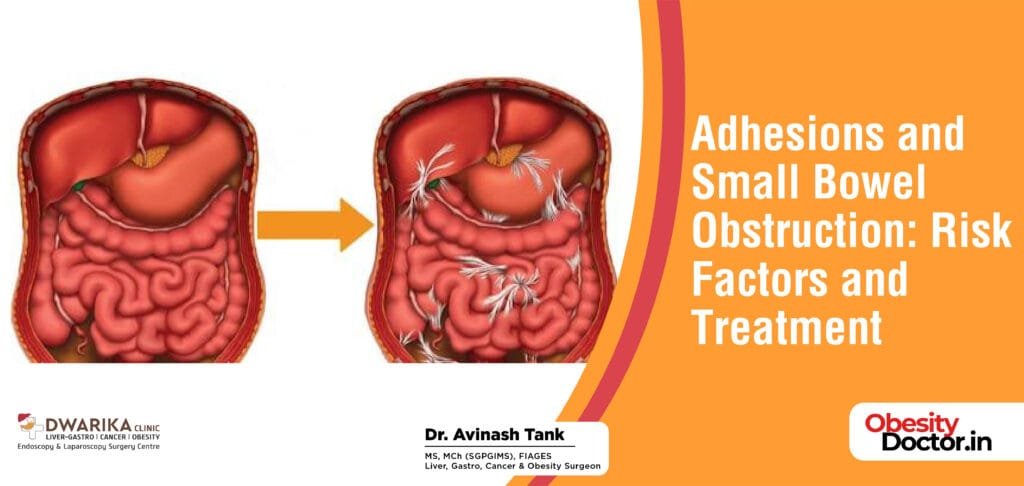
Adhesions and Small Bowel Obstruction:Risk Factors and Treatment. Adhesions are fibrous bands of tissue that can form between organs and tissues within the abdominal cavity.
While adhesions themselves may not cause symptoms, they can lead to complications like adhesive small bowel obstruction.
In this article, we’ll delve into the risk factors associated with adhesions and discuss treatment options for small bowel obstruction resulting from these adhesions.
Risk Factors for Adhesions and Small Bowel Obstruction
Abdominal Surgery
- A history of abdominal surgery is a significant risk factor for developing adhesions. Surgical procedures can leave behind scar tissue, increasing the likelihood of adhesion formation.
Pelvic Surgery
- Surgeries involving the pelvis, such as gynecological or colorectal operations, carry a higher risk of adhesions.
Inflammatory Conditions
- Inflammatory diseases within the abdomen, like Crohn’s disease or endometriosis, can lead to the development of adhesions.
Infections:
- Prior abdominal infections may result in adhesions as the body heals from the infection.
Radiation Therapy:
- Patients who have received abdominal radiation therapy as part of cancer treatment are at an elevated risk of developing adhesions.
Genetic Factors:
- Some individuals may have a genetic predisposition that makes them more susceptible to adhesion formation.
Symptoms of Adhesive Small Bowel Obstruction:
When adhesions lead to a small bowel obstruction, individuals may experience the following symptoms:
– Severe abdominal pain
– Abdominal bloating
– Nausea and vomiting
– Constipation
– An inability to pass gas
– Audible bowel sounds
Treatment for Adhesions and Small Bowel Obstruction
Conservative Management:
- In cases of partial or mild bowel obstruction, initial treatment may be non-surgical. Patients are typically kept nil by mouth, receive intravenous fluids, and are closely monitored. This conservative approach can sometimes allow adhesions to resolve on their own.
Nonsurgical Interventions
- For patients with partial obstructions, interventions like gastrointestinal decompression using a nasogastric tube and medications to manage symptoms may be sufficient.
Surgical Treatment
- Severe or recurring small bowel obstructions often necessitate surgical intervention. During surgery, the adhesions are carefully excised, and the affected bowel is assessed. Any damage is repaired, and efforts are made to minimize the risk of future adhesions.
Laparoscopic Surgery:
- Whenever possible, surgeons may opt for minimally invasive laparoscopic procedures, which involve smaller incisions and reduced scarring.
Adhesion Barriers:
- In some cases, surgical adhesion barriers may be employed to prevent future adhesions from forming.
Small bowel adhesion barriers are typically placed between the intestines and other abdominal organs during surgery. They are made of a variety of materials, including hyaluronic acid, dextran, and carboxymethylcellulose.
The efficacy of small bowel adhesion barriers in preventing adhesions is well-established. A 2019 meta-analysis of 29 studies found that small bowel adhesion barriers reduced the risk of adhesions by 59%.
It’s important for individuals at risk of adhesions and small bowel obstruction to discuss preventive measures and potential treatments with their healthcare providers. Proper management can significantly improve a patient’s quality of life and reduce the risk of complications related to adhesions.
Prevention of Adhesive Small Bowel Obstruction:
There is no surefire way to prevent adhesive small bowel obstruction (ASBO), but there are some things you can do to reduce your risk, such as:
- Minimizing the number of abdominal surgeries: If possible, try to avoid having multiple abdominal surgeries.
- Using minimally invasive surgery:Minimally invasive surgery techniques, such as laparoscopy, can help to reduce the risk of developing adhesions.
- Using barrier agents: Barrier agents, such as hyaluronic acid gel, can be used to coat the tissues during surgery to help prevent adhesions from forming.
- Early mobilization: After surgery, it is important to get up and move around as soon as possible. This can help to prevent adhesions from forming.
Other things you can do to reduce your risk of ASBO include:
- Maintaining a healthy weight:Obesity is a risk factor for ASBO.
- Avoiding smoking: Smoking can increase the risk of inflammation and adhesions.
- Eating a healthy diet: A healthy diet can help to promote good gut health and reduce the risk of inflammation.
- Getting regular exercise: Exercise can help to improve circulation and reduce the risk of adhesions.
If you have any concerns about ASBO, be sure to talk to your doctor. They can help you to develop a plan to reduce your risk and manage the condition if it does occur.
Here are some additional tips that may help to reduce your risk of ASBO:
- Drink plenty of fluids: This will help to keep your stool soft and prevent constipation, which can lead to ASBO.
- Eat a high-fiber diet: Fiber helps to keep your digestive system healthy and can help to prevent blockages.
- Avoid foods that are high in fat and sugar: These foods can contribute to inflammation and adhesions.
- Manage any underlying medical conditions: Certain medical conditions, such as Crohn’s disease and ulcerative colitis, can increase your risk of ASBO. It is important to manage these conditions carefully to reduce your risk.
If you experience any symptoms of ASBO, such as abdominal pain, cramping, nausea, vomiting, constipation, or diarrhea, it is important to seek medical attention immediately.please
https://www.ncbi.nlm.nih.gov/pmc/articles/PMC10089019/
Was this article helpful?

Super-specialist GI, bariatric & cancer surgeon. SGPGIMS (India's premier GI centre) + advanced training in Japan & South Korea. Read full profile →
Last reviewed: July 2026





Comments
Be the first to share your thoughts on this article.