

A bacteria that sits in the stomach
As printedH Pylori is an easily eradicated stomach bacteria, but if ignored, it causes gastritis, peptic ulcers and even cancer, says liver and gastro surgeon Avinash Kumar Tank
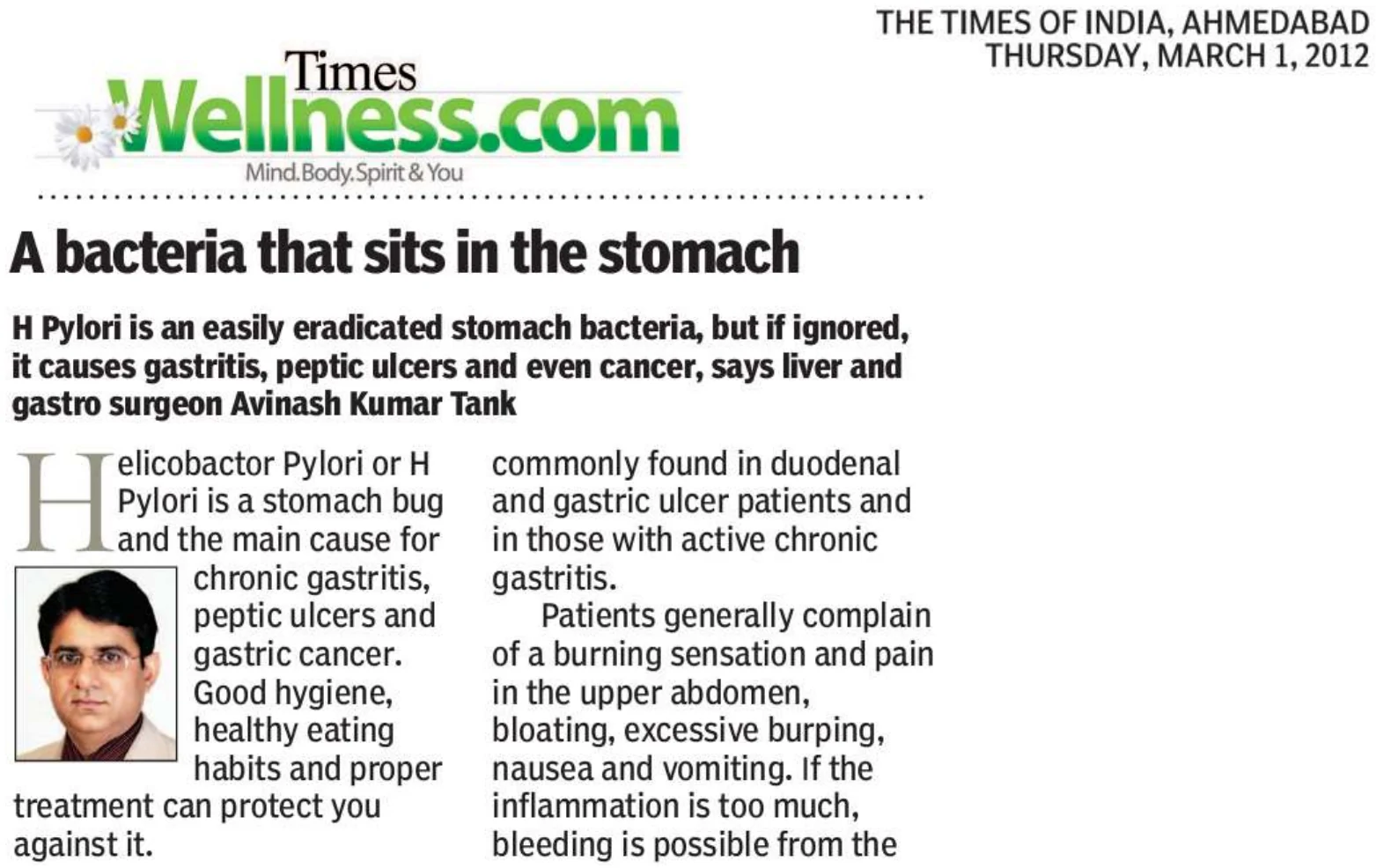
Historical publication record, shown exactly as printed. Select the clipping to read it full size.
What this article covers
The column explains that Helicobacter pylori is a stomach bacterium and a main cause of chronic gastritis, peptic ulcers and gastric cancer, commonly found in people with duodenal and gastric ulcers. It describes the typical complaints — burning pain in the upper abdomen, bloating, excessive burping, nausea and vomiting, and bleeding when inflammation is severe — and notes that good hygiene, healthy eating habits and proper treatment protect against it.
A factual summary of the printed article above. Below: the article as printed, then an up-to-date patient guide on the same topic.
The article, as printed
Helicobactor Pylori or H Pylori is a stomach bug and the main cause for chronic gastritis, peptic ulcers and gastric cancer. Good hygiene, healthy eating habits and proper treatment can protect you against it.
… commonly found in duodenal and gastric ulcer patients and in those with active chronic gastritis.
Patients generally complain of a burning sensation and pain in the upper abdomen, bloating, excessive burping, nausea and vomiting. If the inflammation is too much, bleeding is possible from the …
The scan is cropped between and at the end of the columns; spelling ("Helicobactor") is kept as printed.
The newspaper piece above is a 2012 record. What follows is a present-day guide to Helicobacter pylori infection for patients and families, based on current medical practice.
What is H. pylori?
Helicobacter pylori is a spiral-shaped bacterium that lives in the lining of the stomach. It survives stomach acid by neutralising the acid around itself. It is one of the most common infections in the world and is widespread in India, where many people acquire it in childhood.
Most people who carry H. pylori never have symptoms. In others it causes long-term inflammation of the stomach lining (chronic gastritis), which over years can lead to peptic ulcers and, in a small proportion, to stomach cancer or a type of lymphoma. It is recognised as the most important known risk factor for stomach cancer.
How does it spread?
H. pylori passes from person to person, mainly through contaminated food and water and through saliva or stool within families. Crowded living conditions and limited access to clean water increase the spread. Hand-washing, safe drinking water and hygienic food handling reduce the risk.
Symptoms
- Burning pain or discomfort in the upper abdomen, often when the stomach is empty
- Bloating and a feeling of fullness after small meals
- Excessive burping
- Nausea and occasional vomiting
- Loss of appetite
These symptoms overlap with many other causes of "acidity". Heartburn — a burning feeling rising behind the breastbone — is usually due to acid reflux (GERD) rather than H. pylori, and the two are treated differently. That is why testing matters instead of taking antacids indefinitely.
Warning signs that need prompt care
- Black, tarry stools or vomiting blood or "coffee-ground" material — a bleeding ulcer
- Sudden, severe abdominal pain — a possible perforated ulcer (emergency)
- Unintended weight loss, difficulty swallowing or persistent vomiting
- Anaemia or unexplained tiredness
- New indigestion starting after age 50, or a family history of stomach cancer
People with these signs usually need an endoscopy rather than a simple test-and-treat approach.
How H. pylori is tested
- Urea breath test — you drink a solution and breathe into a bag; accurate and non-invasive
- Stool antigen test — detects the bacterium in a stool sample
- Endoscopy (gastroscopy) with biopsy or a rapid urease test — used when there are warning signs or when the stomach lining needs to be seen directly
- Blood antibody tests only show past exposure, not current infection, and are not recommended to decide on treatment
Acid-reducing tablets (proton pump inhibitors such as pantoprazole or omeprazole) and recent antibiotics can make tests falsely negative. Doctors usually ask you to stop PPIs about two weeks, and antibiotics about four weeks, before a breath or stool test.
Treatment: eradication therapy
H. pylori is treated with a combination of medicines, usually taken for 14 days: an acid-reducing medicine together with two antibiotics, sometimes with bismuth. The exact combination is chosen by your doctor, as antibiotic resistance has grown and some older regimens no longer work well.
- Take every dose for the full course, even if you feel better in a few days
- Expect mild side effects such as a metallic taste, loose stools or nausea; tell your doctor if they are severe
- Avoid alcohol during treatment
- Confirm the infection has gone with a breath or stool test at least four weeks after finishing treatment
Successful eradication allows gastritis to heal, greatly reduces the chance of ulcers returning and lowers the risk of stomach cancer. If the first course fails, a different combination is used.
Habits that protect the stomach
- Avoid unnecessary painkillers (NSAIDs such as ibuprofen, diclofenac and aspirin) — together with H. pylori they sharply raise ulcer risk
- Stop smoking and limit alcohol
- Eat regular meals; avoid very late heavy dinners
- Wash hands before eating, drink safe water, and prefer freshly cooked food
Key takeaways
- H. pylori is a common stomach bacterium and a leading cause of gastritis, peptic ulcers and stomach cancer.
- Upper abdominal burning, bloating, burping, nausea and vomiting are typical symptoms — but many carriers have none.
- Breath and stool tests diagnose current infection; endoscopy is needed when there are warning signs.
- Treatment is a 14-day combination of an acid reducer and antibiotics, followed by a test to confirm cure.
- Black stools, vomiting blood, weight loss or difficulty swallowing need prompt medical attention.
Frequently asked questions
Can H. pylori be cured completely?
Yes. A full course of the correct combination therapy clears the infection in most people. A follow-up test at least four weeks later confirms it is gone.
Is H. pylori contagious?
It spreads between people, mainly through contaminated food and water and within households, but it is not a reason to isolate. Good hygiene reduces spread.
Does H. pylori always cause cancer?
No. Only a small proportion of infected people develop stomach cancer, but because the infection is so common it remains the most important preventable risk factor. Treating it lowers that risk.
Is H. pylori the same as acidity or GERD?
No. H. pylori causes inflammation of the stomach lining and ulcers. GERD is reflux of acid into the food pipe. Symptoms can overlap, so testing helps choose the right treatment.
Why must I stop pantoprazole before the test?
Acid-reducing medicines suppress the bacterium and can make breath and stool tests falsely negative. Your doctor will tell you how long to stop them — usually about two weeks.
Read next
This page is for general information and does not replace a personal consultation. If you have symptoms, please see a doctor.

More from Dr. Avinash Tank in the press
 The Times of India · Jul 2012Safeguard your liver; get vaccinated
 The Times of India · Jun 2012Don’t make straining a habit
 The Times of India · Apr 2012Guard against gallstones
Have a question about digestive, liver or GI health?
Get a clear, personalised answer from Dr. Avinash Tank and the clinical team — confidentially, with same-week slots.