

Guard against gallstones
As printedGallbladder stones are a common cause of abdominal pain. Keeping a healthy lifestyle can protect you from them, says medical expert, Avinash Kumar Tank
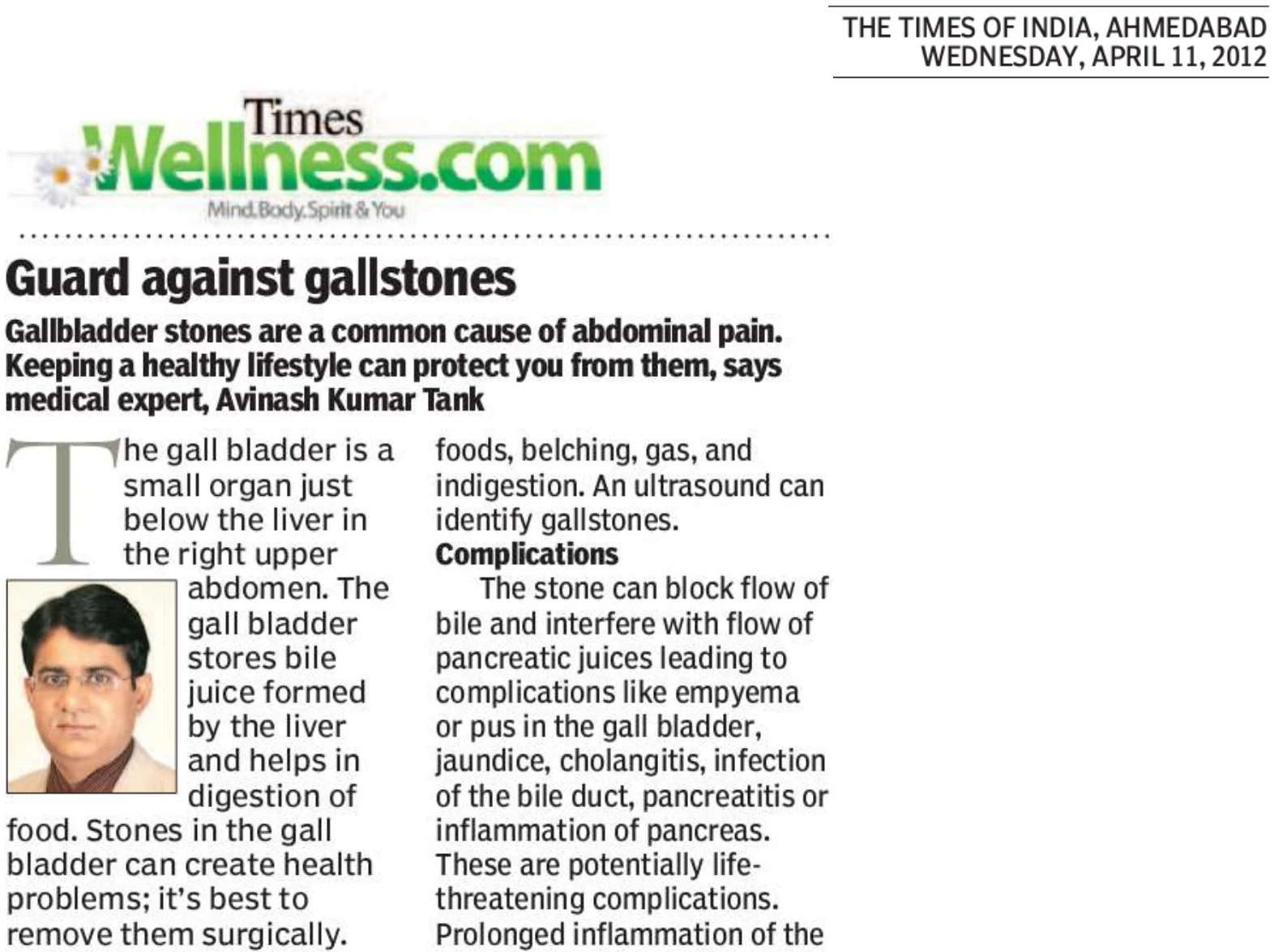
Historical publication record, shown exactly as printed. Select the clipping to read it full size.
What this article covers
Dr. Tank explains the gallbladder’s role in storing bile made by the liver, the problems stones can cause after fatty foods — belching, gas and indigestion — and that an ultrasound identifies them. The column sets out the complications when a stone blocks the flow of bile, including empyema (pus in the gallbladder), jaundice, cholangitis and pancreatitis, and advises that gallbladder stones are best removed surgically.
A factual summary of the printed article above. Below: the article as printed, then an up-to-date patient guide on the same topic.
The article, as printed
The gall bladder is a small organ just below the liver in the right upper abdomen. The gall bladder stores bile juice formed by the liver and helps in digestion of food. Stones in the gall bladder can create health problems; it's best to remove them surgically.
… foods, belching, gas, and indigestion. An ultrasound can identify gallstones.
Complications
The stone can block flow of bile and interfere with flow of pancreatic juices leading to complications like empyema or pus in the gall bladder, jaundice, cholangitis, infection of the bile duct, pancreatitis or inflammation of pancreas. These are potentially life-threatening complications. Prolonged inflammation of the …
The scan is cropped: a line between the columns and the end of the final sentence are not part of the clipping.
The newspaper piece above is a 2012 record. What follows is a present-day guide to Gallstones (cholelithiasis) for patients and families, based on current medical practice.
What are gallstones?
Bile, made by the liver and stored in the gallbladder, helps digest fats. When bile contains too much cholesterol or pigment, or the gallbladder does not empty well, crystals form and slowly grow into stones. They can be as small as a grain of sand or as large as a golf ball, single or many.
Gallstones are very common in India, particularly in the north, and are one of the most frequent reasons for abdominal surgery.
Who is more likely to get them?
- Women, especially after pregnancy or on hormone therapy
- People over 40
- Overweight and obesity — and, equally, rapid weight loss or crash dieting
- Diabetes and high blood fats
- A family history of gallstones
- Long periods of fasting or skipped meals
Symptoms: gallstone pain and indigestion
Many people have "silent" stones found by chance on an ultrasound. When stones cause symptoms, the typical pattern — called biliary colic — is:
- Pain in the upper right or upper middle abdomen, often after a heavy or fatty meal or at night
- Pain that builds up, stays steady for 30 minutes to several hours, and may spread to the right shoulder or back
- Nausea or vomiting with the pain
- Repeated gas, belching, bloating and indigestion after meals
Once stones have caused pain, further attacks — and complications — become more likely.
Complications you should not ignore
A stone that moves out of the gallbladder can block the ducts that carry bile and pancreatic juice. Seek care urgently if you have:
- Pain lasting more than a few hours, or with fever and chills — acute cholecystitis or a pus-filled gallbladder (empyema)
- Yellow eyes, dark urine or pale stools — a stone in the bile duct causing jaundice
- Jaundice with high fever and shivering — cholangitis, an infection of the bile duct that is a medical emergency
- Severe upper abdominal pain going through to the back with vomiting — gallstone pancreatitis
Long-standing stones with repeated inflammation are also associated with a higher risk of gallbladder cancer, which is notably common in north and north-east India. This is one more reason symptomatic stones should be treated rather than tolerated.
How gallstones are diagnosed
An abdominal ultrasound is the standard first test — quick, painless and accurate for stones in the gallbladder. Blood tests (liver function tests, blood count, amylase/lipase) check for infection, jaundice or pancreatitis. If a stone in the bile duct is suspected, an MRCP (a special MRI) or an endoscopic ultrasound (EUS) maps the ducts.
Treatment: laparoscopic gallbladder removal
Medicines, diets and "stone-dissolving" remedies do not reliably remove gallstones, and stones tend to come back while the gallbladder remains. The standard treatment for stones that cause symptoms is laparoscopic cholecystectomy — removal of the gallbladder through a few small incisions using a camera.
- Usually a one- to two-day hospital stay
- Most people return to desk work within a week and normal activity in two to three weeks
- Small scars, less pain and faster recovery than open surgery
- Stones in the bile duct can be removed before or after surgery by ERCP, an endoscopic procedure
People live normal lives without a gallbladder — the liver continues to make bile, which flows directly into the intestine. A few people notice looser stools after fatty meals for some weeks, which usually settles. Silent stones found by chance do not always need surgery; the decision depends on stone size, gallbladder wall changes, diabetes and other risk factors, and is best made with a surgeon.
Lowering your risk
- Keep to a healthy weight and lose weight gradually (about 0.5–1 kg a week), not through crash diets
- Eat regular meals — avoid long fasts and skipped breakfasts
- Choose a fibre-rich diet with vegetables, fruit, whole grains and pulses; limit fried and highly processed foods
- Stay physically active
Key takeaways
- Gallstones form from bile and are common, especially in women, people over 40 and those who are overweight.
- Typical pain is in the upper right abdomen after fatty meals, sometimes spreading to the right shoulder or back.
- An ultrasound confirms the diagnosis.
- Complications — jaundice, cholangitis, pancreatitis, a pus-filled gallbladder — can be life-threatening.
- Symptomatic stones are best treated with laparoscopic gallbladder removal; life without a gallbladder is normal.
Frequently asked questions
Can gallstones be dissolved with medicine or home remedies?
Not reliably. Tablets that dissolve stones work only for a small minority, take months, and stones usually return. Home remedies and "flushes" do not remove gallstones and can delay needed treatment.
Is it safe to live without a gallbladder?
Yes. The liver keeps making bile, which drains directly into the intestine. Most people eat normally after recovery.
Do all gallstones need surgery?
Stones that cause pain or complications should be treated. Silent stones found by chance are often watched, but surgery may be advised in certain situations — your surgeon will assess stone size, the gallbladder wall and your other health conditions.
How long is recovery after laparoscopic gallbladder surgery?
Most patients go home within one to two days, return to light work in about a week and to full activity in two to three weeks.
What should I eat if I have gallstones?
Regular, balanced meals with fewer fried and fatty foods can reduce attacks. Diet does not remove existing stones.
Read next
This page is for general information and does not replace a personal consultation. If you have symptoms, please see a doctor.

More from Dr. Avinash Tank in the press
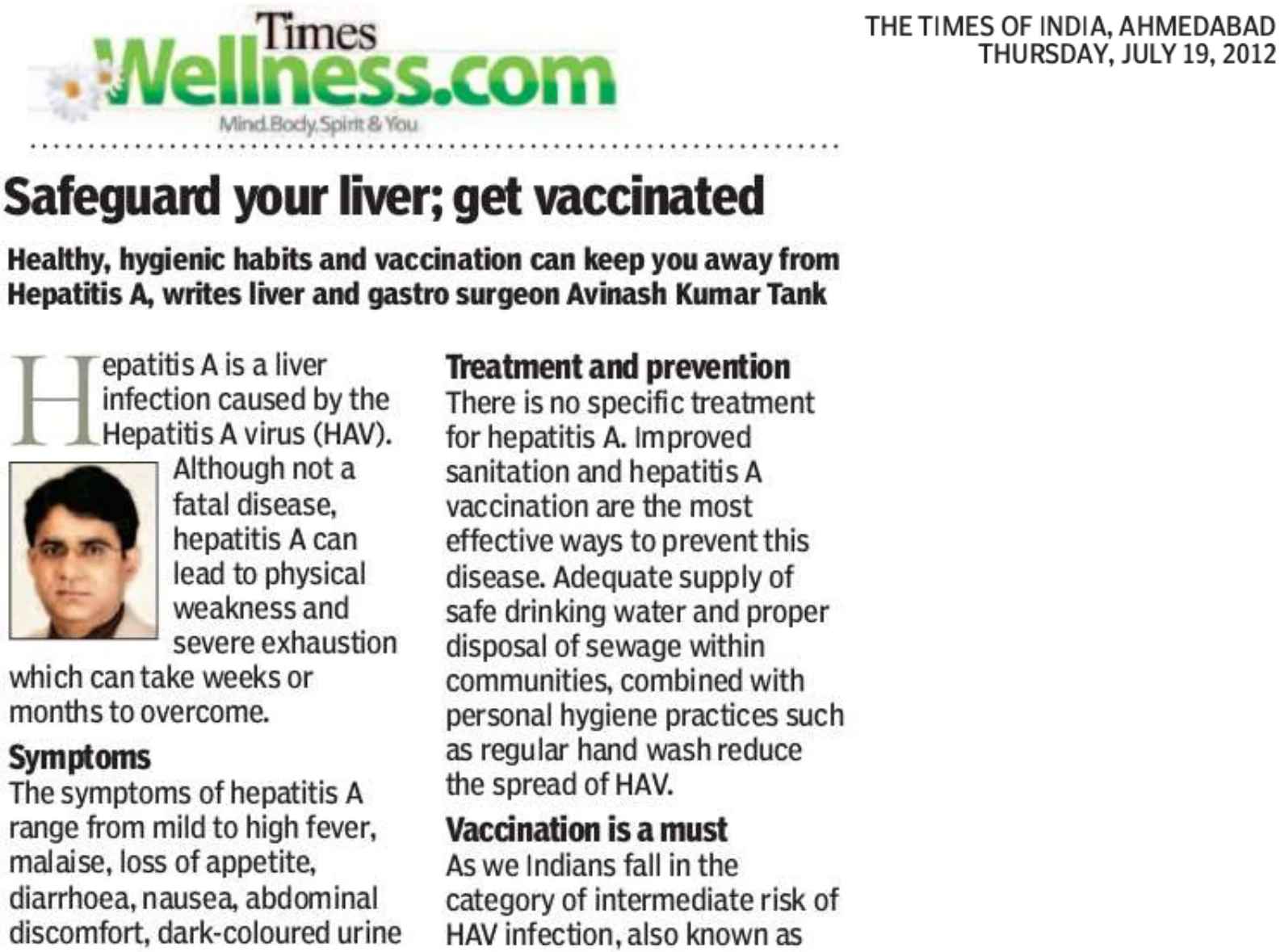 The Times of India · Jul 2012Safeguard your liver; get vaccinated
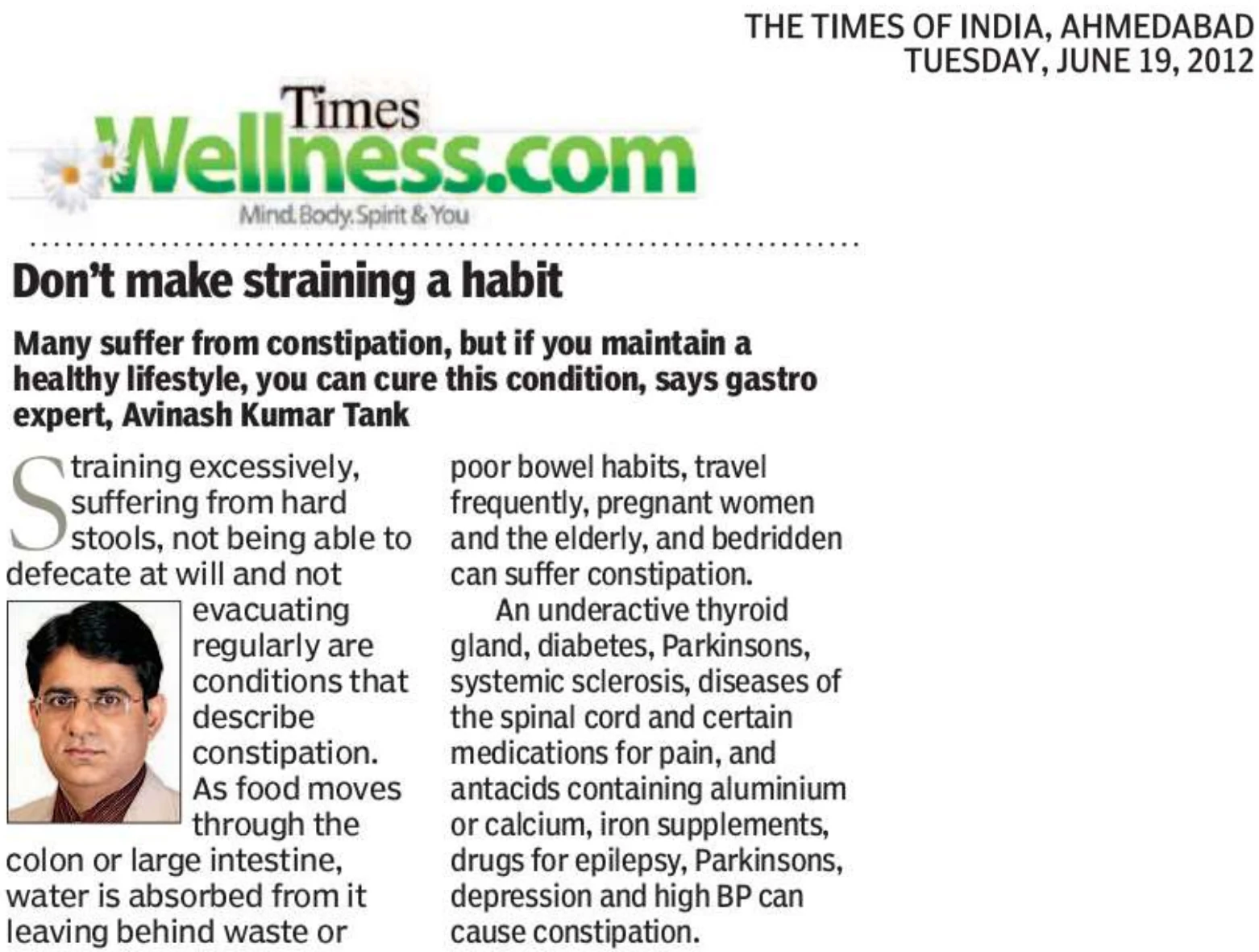 The Times of India · Jun 2012Don’t make straining a habit
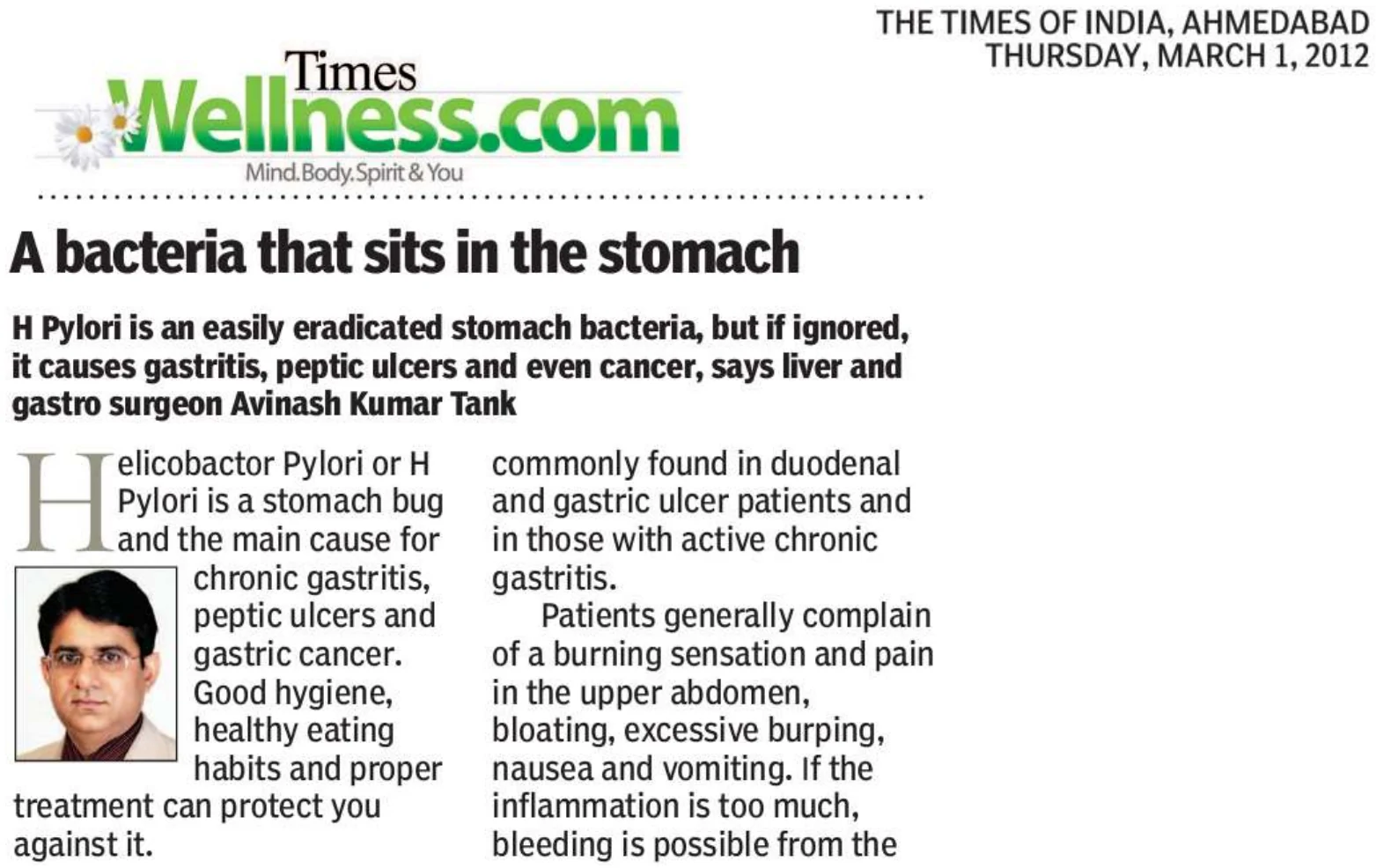 The Times of India · Mar 2012A bacteria that sits in the stomach
Have a question about digestive, liver or GI health?
Get a clear, personalised answer from Dr. Avinash Tank and the clinical team — confidentially, with same-week slots.