

Don’t make straining a habit
As printedMany suffer from constipation, but if you maintain a healthy lifestyle, you can cure this condition, says gastro expert, Avinash Kumar Tank
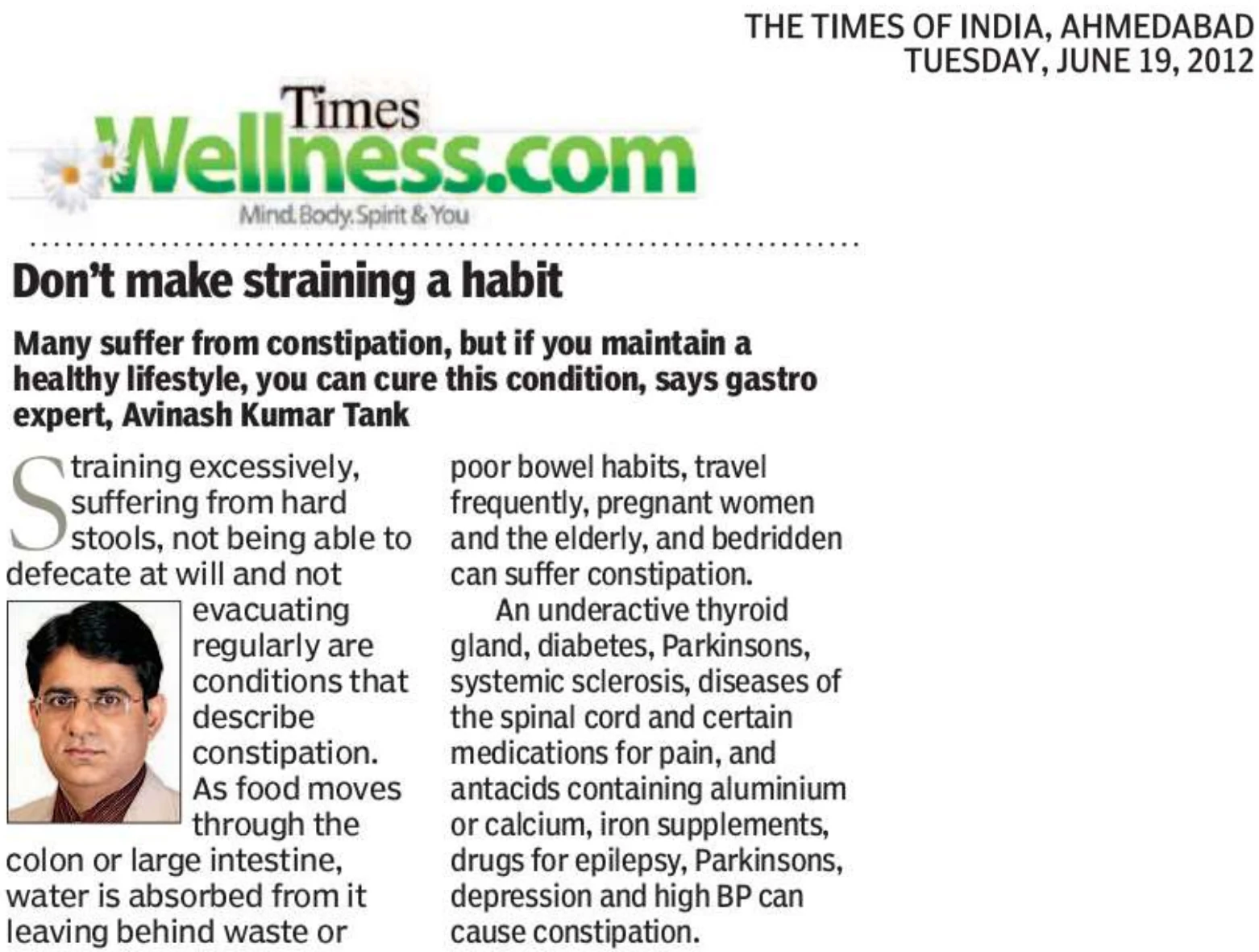
Historical publication record, shown exactly as printed. Select the clipping to read it full size.
What this article covers
The column describes constipation — excessive straining, hard stools, not being able to pass stool at will — and how water absorbed in the large intestine leaves hard waste behind. It lists who is more prone (people with poor bowel habits, frequent travellers, pregnant women, the elderly and bedridden) and medical causes including an underactive thyroid, diabetes, Parkinson’s disease and certain medicines such as some painkillers, aluminium- or calcium-containing antacids, iron supplements and drugs for epilepsy, depression and high blood pressure.
A factual summary of the printed article above. Below: the article as printed, then an up-to-date patient guide on the same topic.
The article, as printed
Straining excessively, suffering from hard stools, not being able to defecate at will and not evacuating regularly are conditions that describe constipation. As food moves through the colon or large intestine, water is absorbed from it leaving behind waste or …
… poor bowel habits, travel frequently, pregnant women and the elderly, and bedridden can suffer constipation.
An underactive thyroid gland, diabetes, Parkinsons, systemic sclerosis, diseases of the spinal cord and certain medications for pain, and antacids containing aluminium or calcium, iron supplements, drugs for epilepsy, Parkinsons, depression and high BP can cause constipation.
The scan shows two columns of the column; a line between them is cut off by the crop and is marked with "…".
The newspaper piece above is a 2012 record. What follows is a present-day guide to Constipation for patients and families, based on current medical practice.
What is constipation?
Constipation is not only about how often you pass stool. Doctors use the term when bowel movements are infrequent (fewer than three a week) or difficult — hard or lumpy stools, straining, a feeling that the bowel has not emptied, or needing to press on the abdomen to pass stool. Normal ranges from three times a day to three times a week.
Why does it happen?
The colon's job is to absorb water from digested food. When stool moves slowly, more water is drawn out and it becomes hard and difficult to pass. The common reasons are:
- Too little fibre — refined flour, white rice, fast food and too few vegetables, fruit, pulses and whole grains
- Too little water, especially in hot weather
- Inactivity, long hours of sitting, being bedridden
- Ignoring the urge to go, or a rushed morning routine
- Travel, a change in routine or diet
- Pregnancy and older age
- Medical conditions: underactive thyroid, diabetes, Parkinson's disease, spinal cord problems
- Medicines: some painkillers (especially opioids), iron and calcium tablets, aluminium- or calcium-based antacids, and some medicines for epilepsy, depression and blood pressure
If constipation began after starting a new medicine, tell your doctor — often a simple change solves it. Do not stop a prescribed medicine on your own.
Warning signs — see a doctor soon
Most constipation is harmless and improves with lifestyle changes. See a specialist without delay if constipation comes with any of these:
- Blood in the stool or black stools
- Unexplained weight loss or loss of appetite
- A recent, persistent change in bowel habit, particularly after age 45–50
- Anaemia (low haemoglobin) or unexplained tiredness
- Severe abdominal pain, swelling or vomiting, or being unable to pass gas
- A family history of bowel cancer or inflammatory bowel disease
These signs can point to a blockage, a polyp or bowel cancer, which need investigation — usually with a colonoscopy.
What long-term straining can lead to
Repeated straining and hard stools raise pressure in the anal canal. Over time this can cause piles (haemorrhoids), a painful tear called an anal fissure, a feeling of heaviness, faecal impaction in older or bedridden people, and in some cases rectal prolapse. Treating the constipation is the first step in treating all of these.
What helps: everyday measures
- Increase fibre gradually to about 25–30 g a day: whole wheat or millet rotis, dal, rajma, chana, vegetables, fruit with the peel (guava, pear, apple, papaya), and seeds such as flax. Add fibre slowly over two to three weeks to avoid bloating.
- Drink enough water through the day — more when you add fibre.
- Move daily: a 30-minute walk stimulates the bowel.
- Keep a routine: try to go at the same time each day, ideally after breakfast, and never ignore the urge.
- Use a footstool under your feet on a Western toilet so your knees are above your hips; this straightens the anorectal angle and reduces straining.
- Limit time on the toilet — no phones or reading; if nothing happens in five minutes, try later.
Laxatives and medical treatment
If lifestyle measures are not enough, a doctor may suggest a fibre supplement (such as isabgol/psyllium) or an osmotic laxative (such as lactulose or polyethylene glycol), which draw water into the stool. Stimulant laxatives are used for short periods. Long-term, unsupervised use of laxatives or "herbal churans" is best avoided.
When constipation is long-standing and does not respond, tests may include thyroid and sugar levels, a colonoscopy, and specialised tests of how the pelvic floor muscles work (anorectal manometry). Some people have a co-ordination problem of these muscles that responds to biofeedback therapy rather than laxatives.
Key takeaways
- Constipation means infrequent or difficult bowel movements — hard stools, straining or incomplete emptying.
- Low fibre, low water, inactivity, travel, pregnancy, some illnesses and several common medicines are the usual causes.
- Blood in stool, weight loss, anaemia or a new change in habit after 45–50 need a specialist check.
- Chronic straining leads to piles, fissure and prolapse — treat the constipation first.
- Fibre, fluids, activity, a routine and correct toilet posture help most people.
Frequently asked questions
How many days without a bowel movement is too long?
Going fewer than three times a week, or having to strain hard each time, counts as constipation. If you have gone several days with pain, bloating or vomiting, or cannot pass gas, seek medical care promptly.
Can constipation cause piles and fissure?
Yes. Hard stools and straining are among the most common causes of piles (haemorrhoids) and anal fissures. Softening the stool is a central part of treating both.
Is it safe to take laxatives every day?
Fibre supplements and osmotic laxatives are generally safe when used as advised by a doctor. Regular use of stimulant laxatives or herbal purgatives without supervision is not recommended.
Which foods relieve constipation?
High-fibre foods — whole grains and millets, dal and legumes, vegetables, and fruits such as guava, papaya, pear and apple with the peel — together with enough water.
When is constipation a sign of something serious?
When it is new and persistent after age 45–50, or comes with blood in the stool, weight loss, anaemia or severe pain. These need evaluation, usually including a colonoscopy.
Read next
This page is for general information and does not replace a personal consultation. If you have symptoms, please see a doctor.

More from Dr. Avinash Tank in the press
 The Times of India · Jul 2012Safeguard your liver; get vaccinated
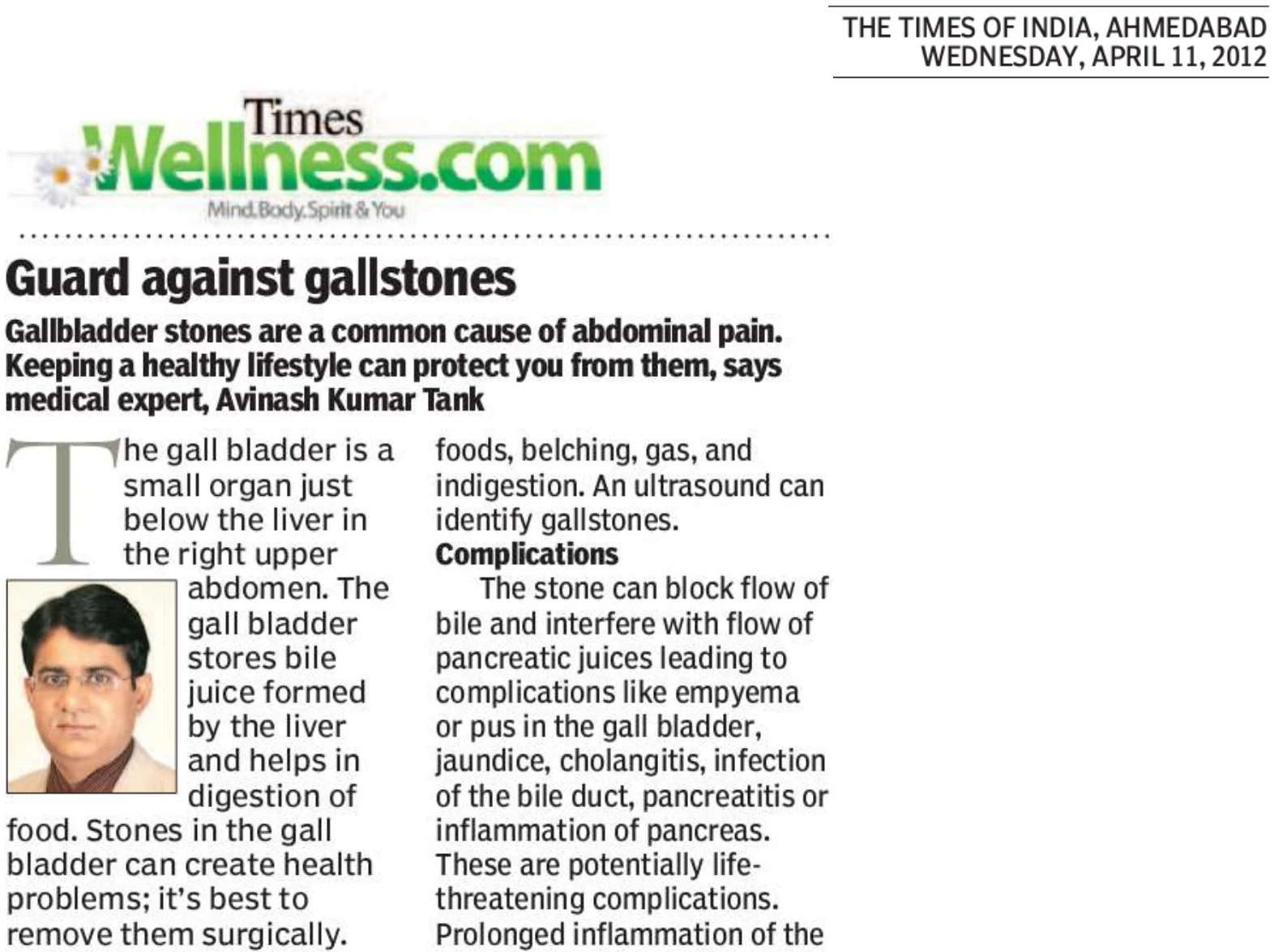 The Times of India · Apr 2012Guard against gallstones
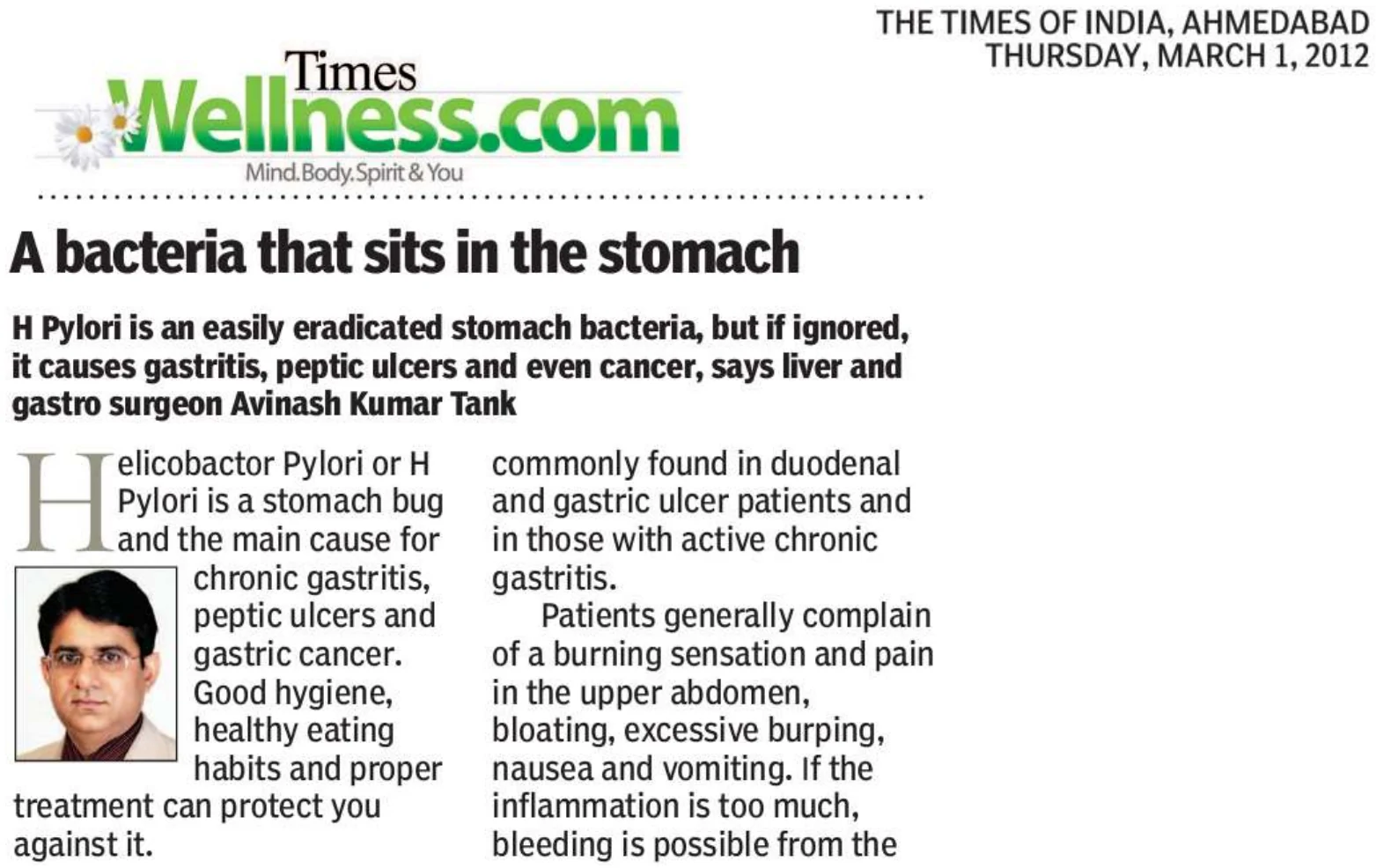 The Times of India · Mar 2012A bacteria that sits in the stomach
Have a question about digestive, liver or GI health?
Get a clear, personalised answer from Dr. Avinash Tank and the clinical team — confidentially, with same-week slots.